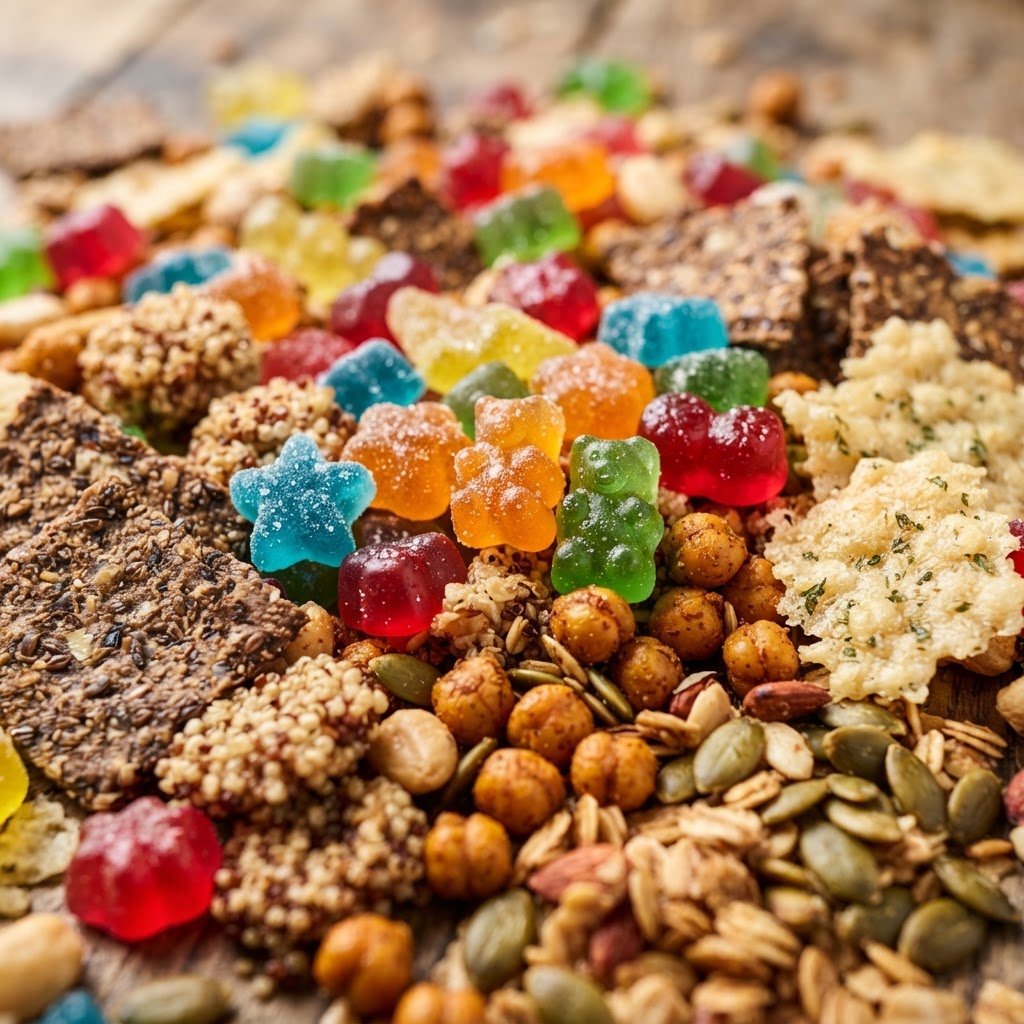
Texture Takeover: The Sensory Food Trends Taking Over Canadian Kitchens
In the modern Canadian kitchen, the most important ingredient isn't a spice or a secret sauce—it is the way your food feels. We are currently living through a 'Texture Takeover,' a culinary shift where mouthfeel, sound, and physical sensation are becoming just as critical as flavour. Whether it is the satisfying snap of a premium snack or the contrast of a creamy mousse against a brittle crust, texture has officially moved from a background detail to the main event.
This shift is largely driven by a multisensory demand. As consumers, we are increasingly seeking out experiences that engage our hearing, touch, and sight. This 'Palate Revolution' is being supercharged by social media, where platforms like TikTok have turned the act of eating into a performance. The rise of #CrunchTok, with its billions of views, has made the audible sound of a crisp shell breaking or a gummy candy stretching a form of digital currency. For Canadians, this means our grocery aisles and restaurant menus are evolving to prioritize products that offer a 'sensory payoff.'
Why is texture suddenly leading the conversation? Part of the answer lies in 'flavour fatigue.' After years of experimenting with bold, global spices, diners are looking for new ways to be surprised. Texture offers a dimension of discovery that doesn't require a radical recipe change. Furthermore, the time spent at home in recent years has fostered a culture of mindful eating, where we are more attuned to the nuances of every bite. When we eat less or choose more carefully, we want that experience to be memorable. Texture provides that immediate, visceral satisfaction.
For Canadian food processors and chefs, this trend is a massive creative opportunity. We are seeing a move toward 'hyper-crunch'—think roasted chickpeas, brittle seed clusters, and dehydrated vegetable chips that provide structure without the heaviness of traditional frying. Simultaneously, there is a surge in demand for 'velvety' and 'creamy' textures. Whipped feta, silken tofu, and mousse-like desserts are appearing on menus to balance out sharper, louder elements. The most successful dishes today are those that layer these sensations: a smoked tartare with rye crumbs, or a seafood chowder topped with crisp potato skins.
This trend is also a practical tool for the home cook. You can elevate a simple meal by focusing on contrast. If you are preparing a salad, add toasted grains or puffed quinoa for that essential 'snap.' If you are serving a dessert, look for ways to combine a hard, crackly shell with a soft, molten centre. By playing with temperature and density—such as pairing a hot, crispy topping with a cold, creamy base—you can turn a standard weeknight dinner into a multisensory event.
As we look toward the future of Canadian food, expect to see more descriptive language on menus and packaging. Words like 'crackling,' 'pillowy,' 'molten,' and 'bouncy' are becoming standard because they sell the physical experience of the meal before the first bite is even taken. Texture is no longer just a gimmick; it is a fundamental design principle that defines how we judge value, enjoy our food, and remember our meals. In 2026, the best food doesn't just taste good—it feels like an adventure.
Comments (0)
Sign in to leave a comment
No comments yet. Be the first to comment!