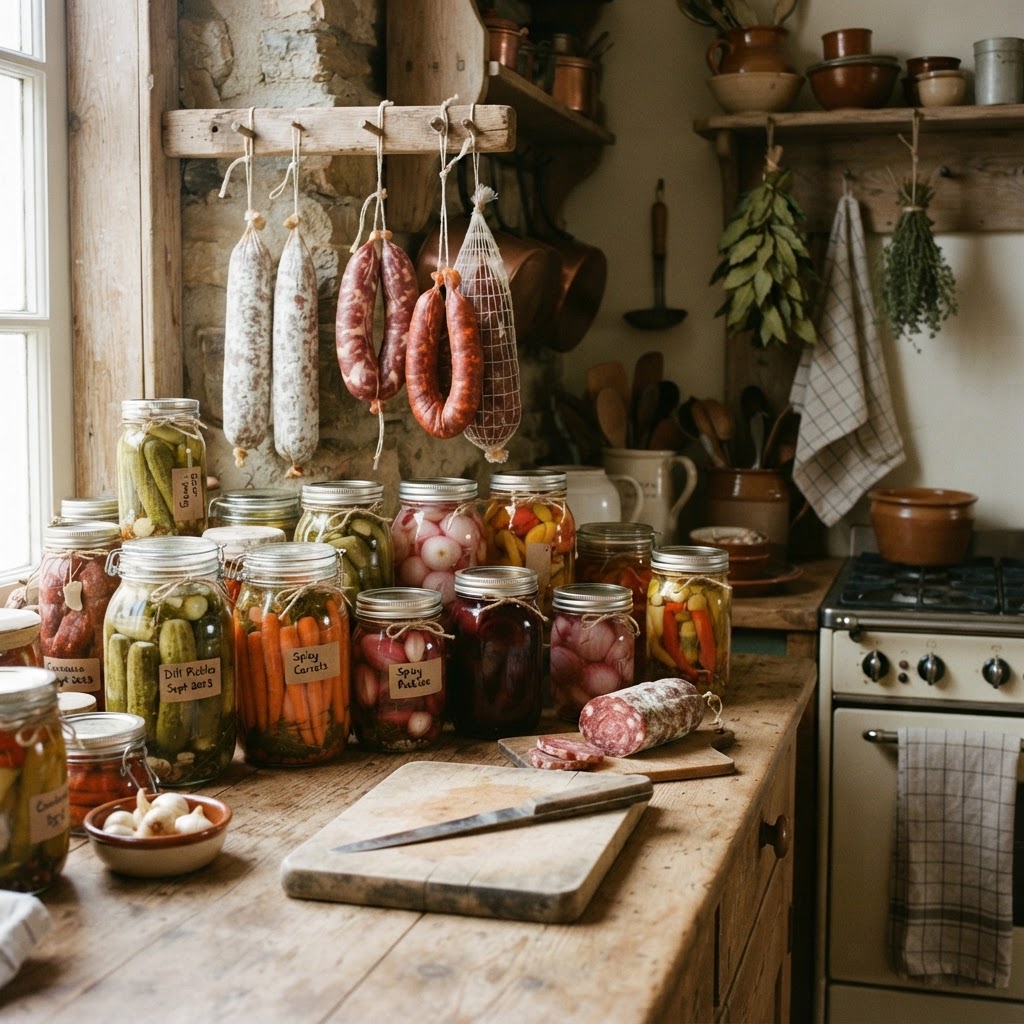
Passed Down: Why Traditional Food Preservation is Making a Comeback
In kitchens across Canada, a quiet revolution is taking place. Mason jars are multiplying on countertops, crocks of cabbage are bubbling away in basements, and the once-forgotten art of food preservation is reclaiming its place in our daily lives. Whether it is the tangy crunch of a fermented pickle or the deep, complex flavours of air-dried herbs, traditional preservation methods are making a significant comeback. This shift is about more than just nostalgia; it is a deliberate move toward authenticity, sustainability, and a deeper connection to the food we eat.
Why the sudden interest in techniques that our grandparents considered standard household knowledge? For many Canadians, the answer lies in a desire for simplicity and food security. Following the supply chain disruptions of recent years, there has been a steady uptick in interest regarding how to preserve garden harvests and local produce. As noted by experts, this movement is part of a broader shift toward sustainability and affordability, allowing us to enjoy the bounty of summer long after the first frost has settled over the landscape.
At the heart of this revival is fermentation—a process as old as civilization itself. Unlike canning, which often requires specialized equipment and precise heat processing, fermentation is remarkably accessible. By simply using the right ratio of salt to vegetables, you create an environment where beneficial bacteria can thrive, effectively preserving the food while enhancing its nutritional profile. Research has shown that fermented foods are rich in probiotics, which support gut health, immunity, and metabolism. It is a rare instance where the most traditional method is also one of the most scientifically backed for modern wellness.
For those looking to start their own preservation journey, the barrier to entry is lower than you might think. You do not need a massive farm to participate. Even a small batch of sauerkraut or a jar of quick-pickled onions can transform your kitchen routine. The key is to start with high-quality, local ingredients. When you preserve your own food, you are not just extending the shelf life of your groceries; you are reducing food waste and cutting down on the reliance on highly processed, store-bought alternatives. It is a powerful way to take control of your pantry and your health.
Beyond the practical benefits, there is a sensory richness to these techniques that modern, mass-produced food often lacks. Traditional preservation allows for complex flavour profiles that tell a story of place and method. Whether it is the heritage of Quebecois cornichons or the growing popularity of kimchi powder, these foods offer a sense of connection that resonates with the modern Canadian consumer. We are moving away from generic wellness claims and toward food that feels real, rooted, and transparent.
As we look toward the future of sustainable living, the integration of these ancient skills into our modern lives is not a step backward. Instead, it is a practical, delicious way to build a more resilient food system. By embracing the rhythm of the seasons and learning to preserve what we have, we are not just saving money—we are preserving a legacy of self-reliance and culinary craftsmanship that will serve us for generations to come.
Comments (0)
Sign in to leave a comment
No comments yet. Be the first to comment!