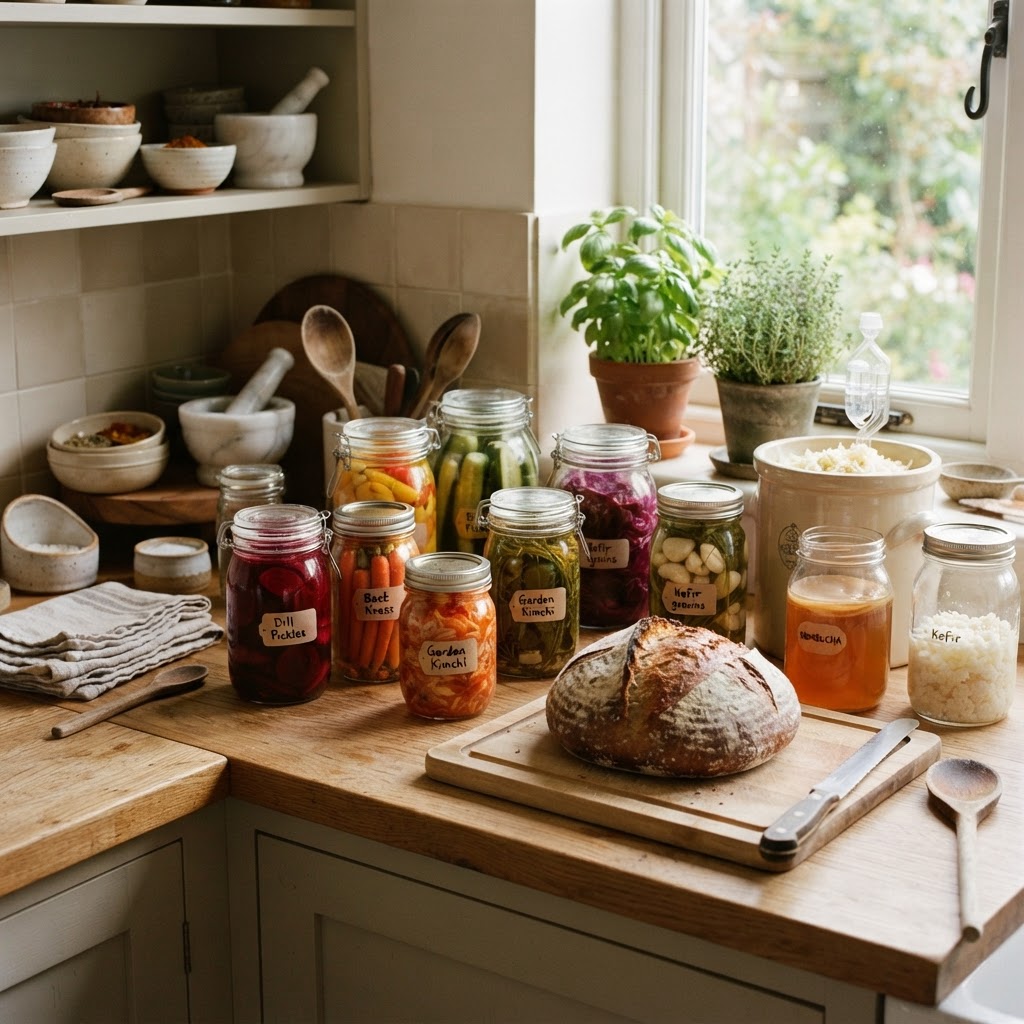
Back to Basics: Why Fermented and Preserved Foods are Taking Over Canadian Kitchens
In an era of fast-moving wellness trends and complex ingredient lists, a quiet revolution is taking place in Canadian kitchens. As we move through 2027, there is a palpable shift toward simplicity and authenticity. Canadians are increasingly turning away from ultra-processed convenience and looking backward to move forward, embracing the time-tested traditions of fermenting, pickling, and preserving. This "Passed Down" movement, recently highlighted by the Canadian Health Food Association (CHFA) as a top wellness trend, is about more than just food—it is about reclaiming our connection to the table.
Why the sudden resurgence? For many, it is a desire for transparency. When you ferment a jar of sauerkraut or pickle a batch of seasonal cucumbers, you know exactly what is in your food. This renewed interest reflects a broader cultural desire to simplify our diets while celebrating the techniques that sustained our ancestors. Whether it is the tang of a homemade kombucha or the depth of a slow-simmered bone broth, these practices offer a way to slow down and engage with our food on a deeper level.
Beyond the nostalgia, there is a growing body of scientific interest in the role of fermented foods in our daily lives. The Canadian Fermented Foods Initiative (CFFI) has been working to bridge the gap between traditional knowledge and modern nutrition. Experts note that the human microbiome—the trillions of microbes living within us—plays a critical role in everything from immunity to metabolism. While Health Canada continues to evaluate the evidence, many Canadians are already incorporating fermented staples like kefir, miso, and kimchi into their routines, citing perceived health benefits and improved digestion.
Getting started with these traditions is more accessible than you might think. You do not need a professional kitchen to begin your journey into preservation. Start small by experimenting with "quick pickles" using a simple salt brine, or try your hand at a basic sourdough starter. These micro-rituals not only reduce food waste by extending the shelf life of your produce but also introduce complex, vibrant flavours that store-bought alternatives often lack. For those looking for convenience, the market is catching up; Canadian grocers are increasingly stocking private-label fermented goods, making it easier than ever to support local producers who prioritize traditional methods.
As we look toward the future of Canadian food, the return to these basics represents a sustainable path forward. By choosing to preserve the harvest and embrace the slow art of fermentation, we are doing more than just following a trend—we are building a more resilient, connected, and flavourful food culture. So, this weekend, consider clearing some space on your counter for a mason jar or two. Your gut, your palate, and your heritage will thank you.
Comments (0)
Sign in to leave a comment
No comments yet. Be the first to comment!