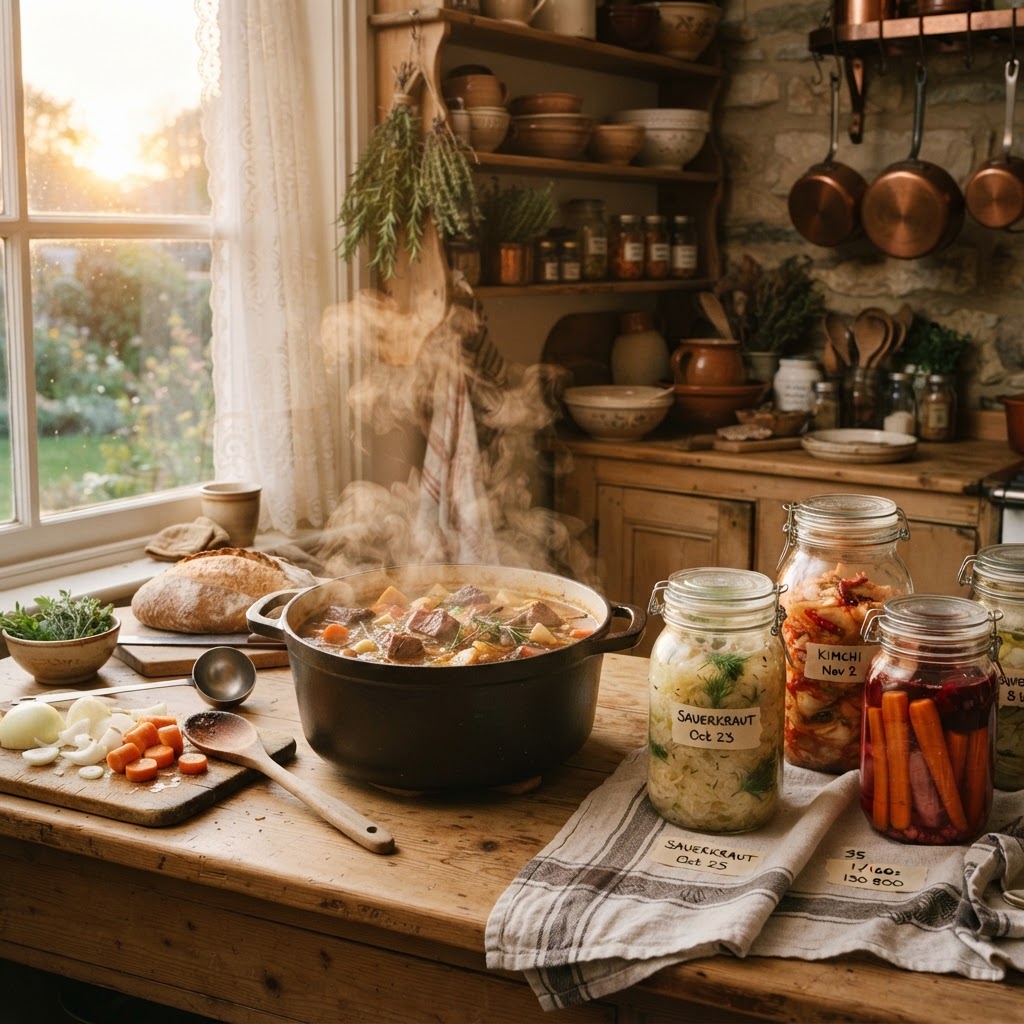
The Return to Tradition: Why Canadians Are Embracing Simmered and Fermented Foods
In an era defined by rapid digital transformation and the constant hum of a 'polycrisis' world, many Canadians are finding solace in the kitchen. There is a palpable shift occurring across the country: a move away from the ultra-processed and the instant, toward the slow, the deliberate, and the traditional. Whether it is the bubbling jar of sauerkraut on a kitchen counter or the rich, complex aroma of a long-simmered bone broth, Canadians are increasingly embracing culinary practices that prioritize patience and authenticity. This return to tradition is more than just a nostalgic trend; it is a conscious effort to reclaim control over our health and our food systems. The resurgence of fermentation is perhaps the most visible sign of this movement. Once a necessity for survival before the advent of refrigeration, fermentation—the process of using microbes to transform food—is now being celebrated for its potential to support the gut microbiome. According to recent research, while taste remains the primary driver for consumption, Canadians are increasingly aware of the link between fermented foods like kefir, kombucha, and kimchi and overall digestive health. The establishment of the Canadian Fermented Foods Initiative (CFFI) underscores this national interest, aiming to bridge the gap between ancient practices and modern nutritional science. For those looking to dip their toes into these traditions, the barrier to entry is lower than you might think. You don't need a professional lab to start; you simply need curiosity. Start by distinguishing between 'quick-pickled' vegetables—which are preserved in vinegar and lack the live cultures of true ferments—and lacto-fermented vegetables, which rely on salt brine and time to develop their signature tang and probiotic benefits. Simple, accessible projects like making your own sauerkraut or experimenting with a basic kombucha brew can be a rewarding way to increase your dietary diversity and connect with the history of your food. Beyond fermentation, the art of the slow simmer is also making a comeback. In a culture that often equates 'fast' with 'efficient,' the act of simmering a stew or broth for hours is a radical act of mindfulness. These slow-cooked meals offer a depth of flavour that modern convenience foods simply cannot replicate. They allow us to utilize whole ingredients, reduce food waste, and create nourishing, comforting meals that serve as a foundation for family gatherings and personal wellness. This focus on 'slow food' aligns perfectly with the growing desire for authenticity; we want to know where our food comes from and how it was prepared. If you are feeling overwhelmed by the complexity of modern life, consider these actionable steps to bring more tradition into your daily routine: First, start small. Don't feel pressured to ferment everything at once; pick one item, like a jar of fermented carrots or a simple sourdough starter, and master it. Second, seek out trusted resources. Organizations like the Canadian Fermented Foods Initiative provide valuable insights into the safety and benefits of these practices, helping to demystify the process. Finally, prioritize quality over quantity. Whether you are buying from a local grocer or preparing a meal from scratch, choose ingredients that reflect the values of sustainability and provenance. By slowing down and embracing these time-tested techniques, we aren't just feeding our bodies; we are nourishing our connection to the past and building a more resilient, flavourful future.
Comments (0)
Sign in to leave a comment
No comments yet. Be the first to comment!