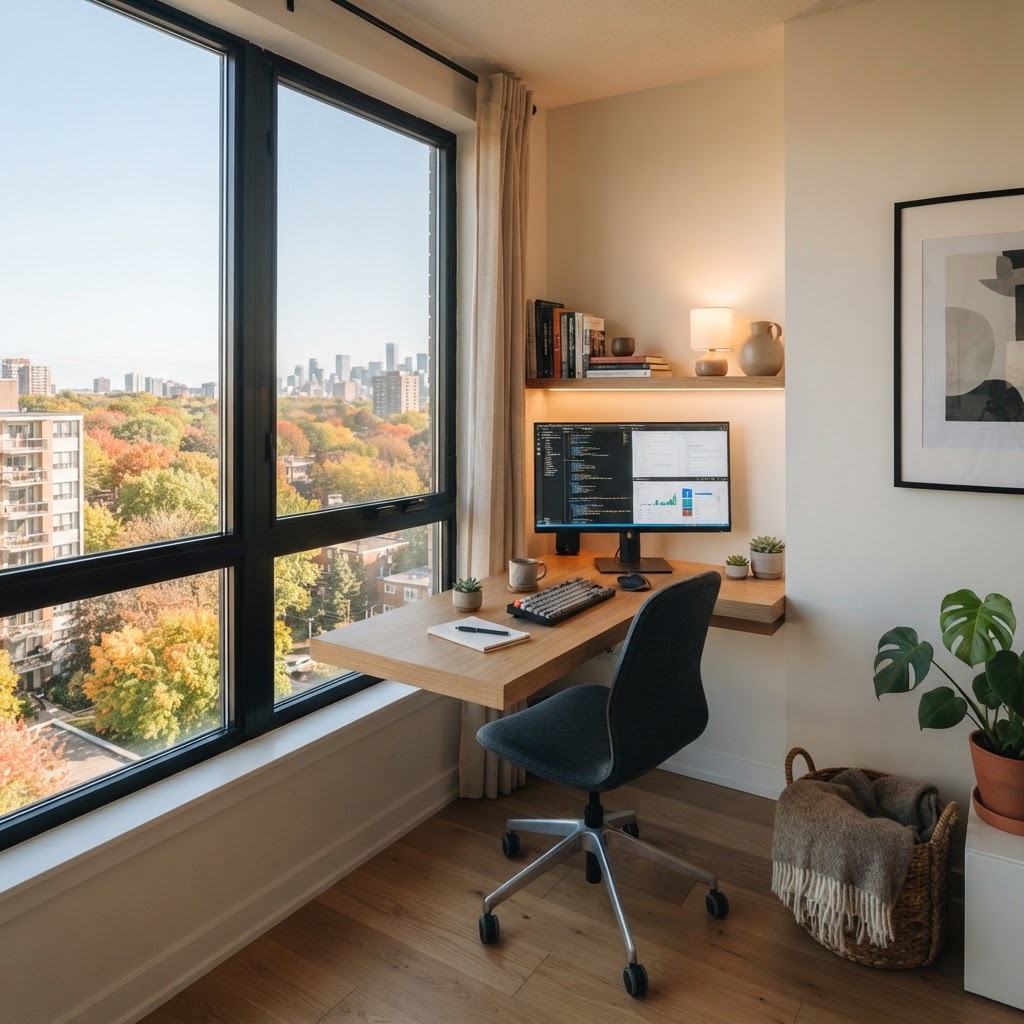
Designing a 'Digital Nomad' Workspace in Small Canadian Apartments
For many Canadians living in urban hubs like Toronto, Vancouver, or Montreal, the dream of a dedicated home office often clashes with the reality of square footage. As the digital nomad lifestyle becomes a permanent fixture, the challenge is no longer just finding a place to plug in—it is about creating a workspace that supports your posture and productivity without turning your living room into a cubicle. The secret lies in intentional design that prioritizes ergonomics while maintaining the cozy, curated aesthetic of a modern Canadian home. The first step in reclaiming your space is to think beyond traditional office furniture. In a small apartment, every piece must pull its weight. Instead of a bulky, industrial desk, look for slim-profile furniture that complements your existing decor. Consider a wall-mounted or floating desk that can be tucked away when the workday ends, or a console table that doubles as a dining surface. By matching the desk height to the back of your sofa, you can create a seamless transition that makes the workspace feel like a natural extension of your living area rather than an afterthought. Ergonomics is non-negotiable, even in a studio. If you are working from a dining chair, you are likely compromising your long-term health. Invest in a high-quality, adjustable task chair that fits your aesthetic—think sleek mid-century modern designs or minimalist silhouettes that don't overwhelm the room. If you share your space, consider a side-by-side setup for narrow rooms or a back-to-back arrangement to provide acoustic separation during back-to-back Zoom calls. To further dampen sound and create a 'workspace sanctuary,' incorporate soft textures like a plush area rug to define the zone, or use a decorative felt screen to provide visual and auditory privacy. To keep your apartment feeling open and airy, utilize vertical space. Floating shelves are a game-changer for storing tech accessories and books, keeping your floor clear and your mind clutter-free. Mirrors are another essential tool in the small-space designer’s kit; placing a mirror near your desk can reflect light and make a cramped corner feel significantly larger. Don't forget to 'soften the edges' of your office by adding personal touches. A few well-placed plants not only improve air quality but also break up the rigid lines of technology, making your space feel like a home rather than a box. Finally, remember that the best home offices are those that can disappear. Whether it is a custom joinery unit that hides your monitor behind cabinet doors or a simple fold-down desk, the ability to 'close' your office at 5:00 PM is vital for mental well-being. By choosing furniture with similar tones and materials to your living room, you ensure that your workspace blends seamlessly into your home, allowing you to switch off and enjoy your space long after the laptop is closed.
Comments (0)
Sign in to leave a comment
No comments yet. Be the first to comment!