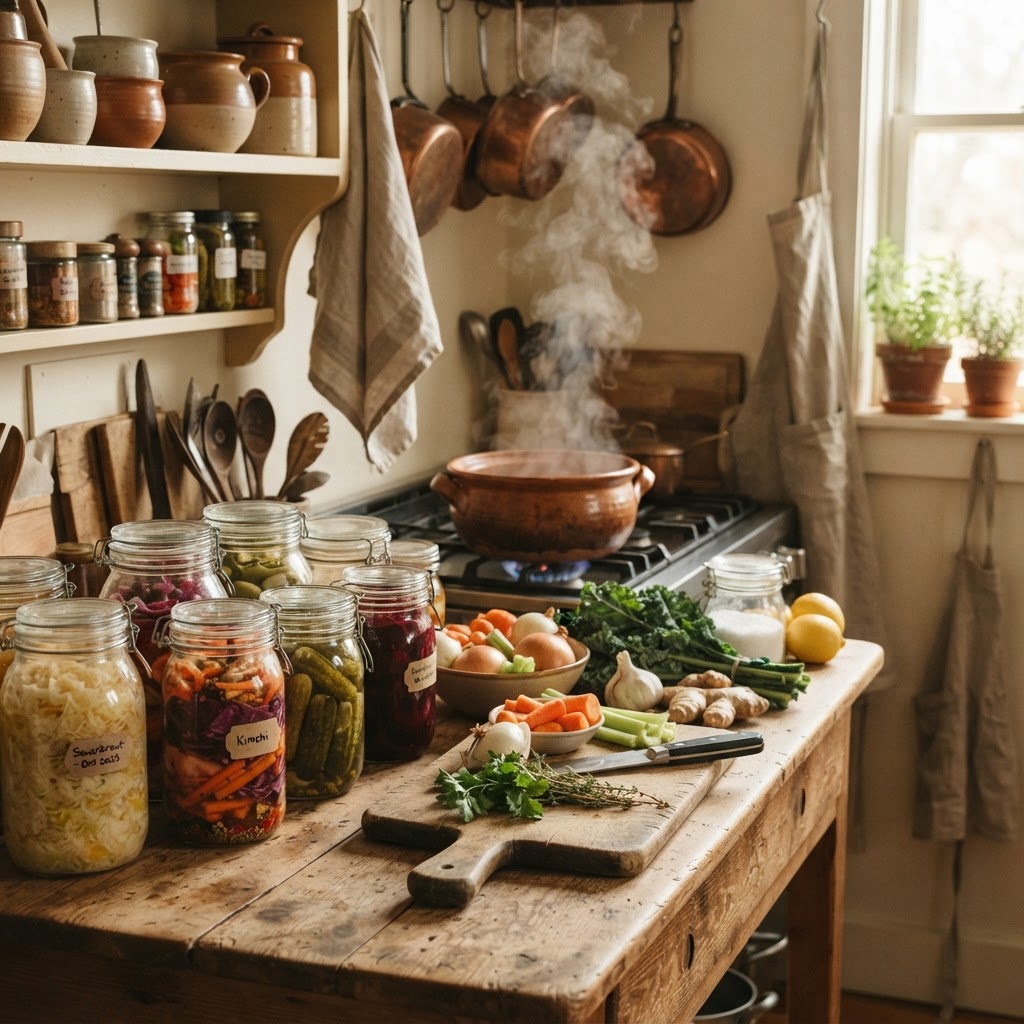
The Return of Tradition: Why Fermented and Simmered Foods are Taking Over Canadian Kitchens
In the fast-paced world of modern Canadian living, our relationship with food has undergone a radical transformation. For years, the convenience of processed, ready-made meals dominated our grocery carts. However, as we head into 2027, a significant shift is occurring. Canadians are increasingly turning their backs on long, unpronounceable ingredient lists in favor of something much older and more reliable: the wisdom of our ancestors. This movement, identified by the Canadian Health Food Association as a top wellness trend for 2027, is all about the return to tradition—specifically, the art of simmering, fermenting, pickling, and preserving [5, 8].
Why the sudden pivot? It comes down to a desire for simplicity, authenticity, and a deeper connection to what we put on our plates. Today’s Canadian consumer is more intentional than ever, reading labels with a critical eye and seeking out foods that do more than just fill a void—they want food that supports gut health, reduces inflammation, and provides genuine nourishment [6, 10].
At the core of this trend is the resurgence of fermentation. While cultures across Canada, including First Nations and Inuit communities, have utilized fermentation and preservation techniques for thousands of years to survive and thrive in our climate, these practices are now finding a new home in the modern urban kitchen [3]. From the tangy crunch of house-made sauerkraut to the complex, probiotic-rich depths of kombucha and kefir, fermented foods are being recognized not just as culinary staples, but as essential tools for health [4, 7]. Research has shown that a diet high in fermented foods can significantly increase gut microbiome diversity and lower inflammatory markers, making them a powerful ally in the fight against chronic disease [4].
Simmering, too, is making a comeback. There is a profound comfort in the slow, steady process of a long-simmered bone broth or a traditional stew. Unlike the high-heat, high-speed cooking methods that strip ingredients of their integrity, simmering allows flavors to meld and nutrients to become more bioavailable. It is a practice that demands patience—a rare commodity in 2027—but rewards the cook with a depth of flavor that no processed additive can replicate [5].
For those looking to integrate these traditions into their own routines, the barrier to entry is lower than you might think. You don't need to be a professional chef to start. Begin by exploring local markets for high-quality, small-batch fermented products like kimchi or fermented vegetable brines. If you are feeling adventurous, try your hand at a simple "fridge pickle" using seasonal Canadian cucumbers or root vegetables. For the simmered approach, start by making your own stock from vegetable scraps or high-quality bones; the difference in both taste and nutritional profile is immediate and undeniable.
This return to tradition is more than just a passing fad; it is a reclamation of our culinary heritage. By choosing to ferment, pickle, and simmer, we are not just cooking—we are participating in a time-tested ritual that honors the ingredients and our own well-being. As we look toward the future of Canadian food, it is clear that the most innovative path forward is, in fact, a look back at where we came from.
Comments (0)
Sign in to leave a comment
No comments yet. Be the first to comment!