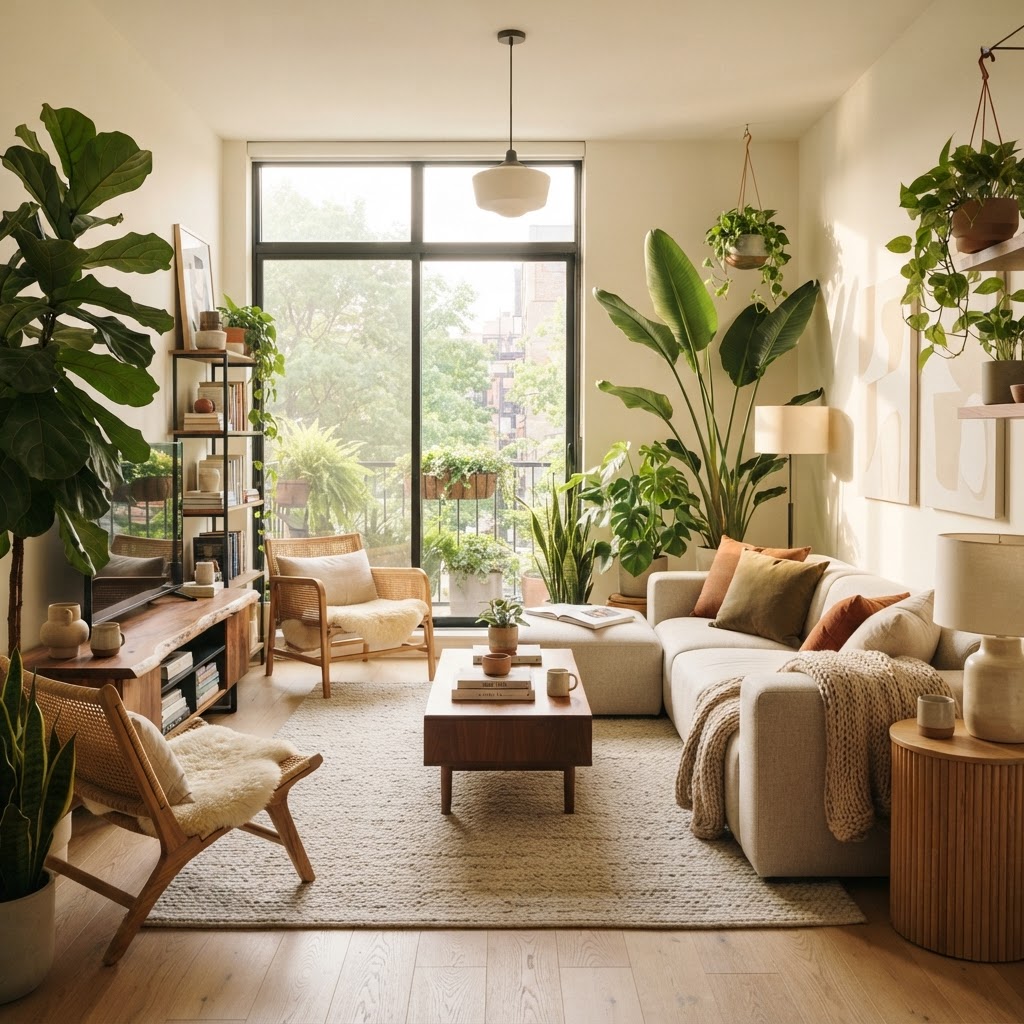
Biophilic Design: Why Canadian Homeowners Are Bringing the Outdoors In
As urban living becomes the norm across Canada, many of us are finding ourselves spending up to 93% of our time indoors. In the bustling heart of cities like Toronto, Vancouver, and Montreal, the concrete jungle can often feel disconnected from the natural world. This is where the surge in biophilic design comes in—a movement that is fundamentally changing how Canadians approach home decor. Biophilic design is not merely about aesthetics; it is a science-backed philosophy that integrates natural elements, organic shapes, and greenery into our living spaces to foster a deeper connection with nature and significantly improve our mental well-being. At its core, biophilic design is built upon three pillars: direct nature in the space, natural analogues, and the nature of the space itself. For the modern Canadian apartment dweller, this means moving beyond a single potted plant on a windowsill. It is about creating a holistic environment that mimics the restorative qualities of the outdoors. Whether you are working from a compact condo or a cozy rental, bringing the outside in can help reduce stress, improve sleep, and spark creativity. One of the most accessible ways to start is by focusing on 'Nature in the Space.' This involves maximizing natural light—a precious commodity during our long Canadian winters—by using sheer curtains or strategically placed mirrors to bounce sunlight into darker corners. Incorporating indoor greenery is another essential step. For those in small spaces, vertical gardens or wall-mounted planters are game-changers. Companies like Vancouver-based By Nature Design have been leading the charge in Canada, offering everything from preserved moss walls to custom living installations that require minimal maintenance while providing maximum visual impact. Beyond plants, consider the 'Natural Analogues' pillar. This is where you can get creative with textures and materials. Swap out synthetic rugs for jute or wool, and introduce furniture with organic, curved shapes rather than rigid, sharp lines. These biomorphic forms are inherently more soothing to the human eye. Earthy color palettes—think deep forest greens, warm terracotta, and soft stone grays—can transform a sterile white apartment into a grounding retreat. For those looking to make a more permanent change, consider the 'Nature of the Space.' This involves creating dedicated zones for relaxation or meditation. Even in a small apartment, you can designate a 'zen corner' with a comfortable chair, a small water feature, or a collection of natural stone decor. The goal is to create a flow that feels harmonious and intentional. The benefits of these changes are profound. Research indicates that exposure to natural elements can lower heart rates, reduce cortisol levels, and even increase productivity for those working from home. In a country where we spend so much of our year indoors, our homes should act as a buffer against the stresses of modern life. By thoughtfully integrating these biophilic principles, you aren't just decorating; you are investing in your own mental health and creating a sanctuary that feels truly alive.
Comments (0)
Sign in to leave a comment
No comments yet. Be the first to comment!