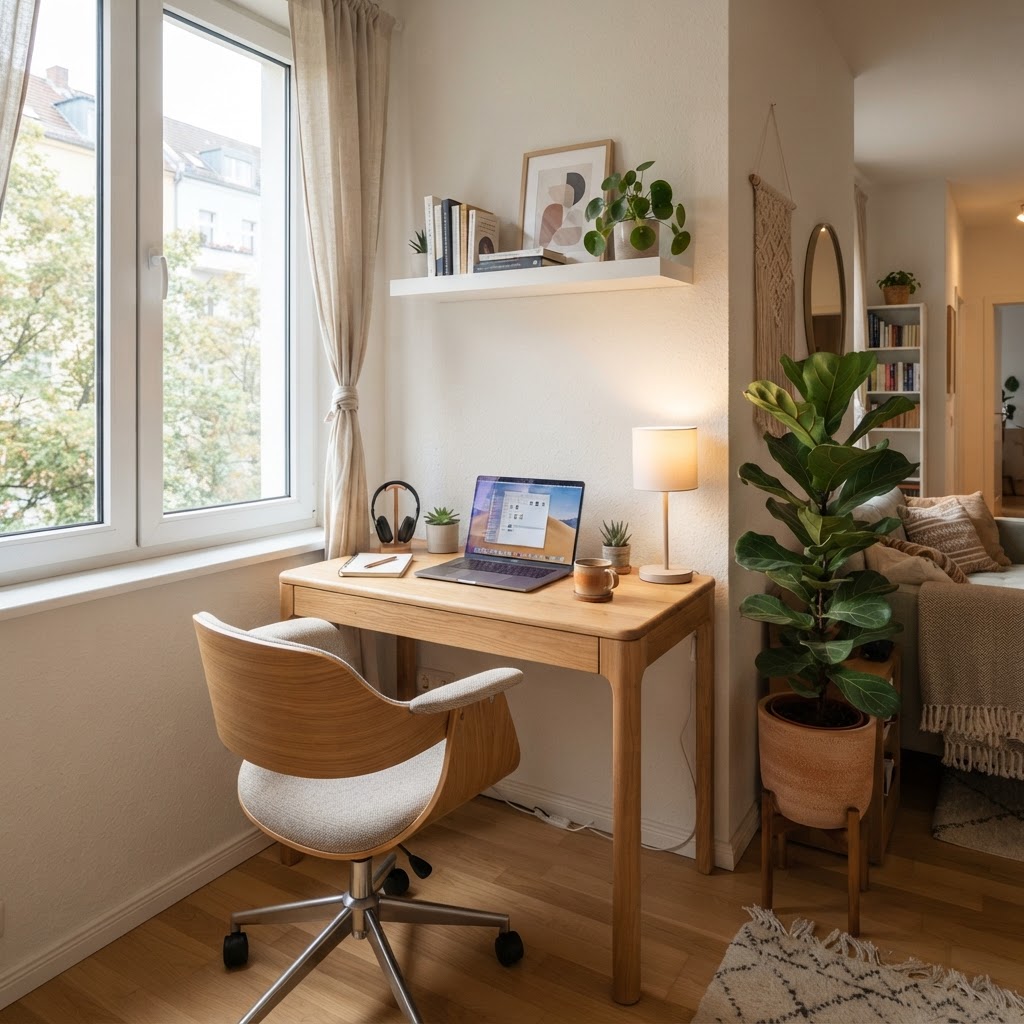
Digital Nomadism in Canada: Designing the Ultimate Small-Space Home Office
For many Canadians living in urban centers like Toronto, Vancouver, or Montreal, the dream of a dedicated home office often clashes with the reality of limited square footage. As hybrid work becomes a permanent fixture of our professional lives, the need for a functional, ergonomic, and aesthetically pleasing workspace has never been greater. The good news? You don’t need a spare room to build a professional-grade office. By shifting your perspective from 'square footage' to 'activity-based design,' you can create a sanctuary that supports your productivity without compromising your living space.
The Myth of the Spare Room
There is a pervasive myth that a serious home office requires a dedicated study. This belief often leads to procrastination, with many professionals working from kitchen tables or couches, which can lead to poor posture and blurred boundaries between work and rest. The truth is that a well-planned corner, a repurposed closet, or a foldaway setup can deliver the same level of focus and comfort. The secret lies in designing for your specific tasks rather than trying to fit a traditional office layout into a compact footprint.
Ergonomics on a Budget
In a small space, ergonomics is not a luxury—it is a necessity for long-term health. You don't need an expensive executive chair to maintain proper posture. Instead, focus on the 'Golden Triangle' of home office ergonomics: a laptop riser to bring your screen to eye level, an external keyboard and mouse to keep your wrists neutral, and a supportive cushion for lumbar support. If you are tight on space, consider a portable monitor or a laptop stand that can be tucked away at the end of the day. Investing in a task lamp with adjustable color temperature is another high-impact, low-cost upgrade that reduces eye strain during those long Canadian winter afternoons.
Verticality and Multifunctional Furniture
When floor space is at a premium, look up. Vertical storage is your best friend in a small apartment. Utilize wall-mounted shelving, pegboards, or high-reaching bookcases to keep your desk surface clear of clutter. A clean desk is essential for a clear mind. Furthermore, prioritize furniture that earns its keep. A console table can double as a sleek entryway piece and a desk, while ottomans with hidden storage can house your cables, notebooks, and chargers when not in use. For those who truly lack space, a wall-mounted fold-down desk is a game-changer, allowing your office to 'disappear' completely once you clock out.
Creating Psychological Boundaries
One of the biggest challenges of working from home is the inability to 'leave' the office. To maintain a healthy work-life balance, create clear physical and temporal boundaries. Use a small area rug to define your workspace zone, or use a decorative plant or a low-rise screen to visually separate your desk from your living area. Establishing a ritual—such as turning on a specific lamp when you start work and turning it off when you finish—can signal to your brain that it is time to transition from professional mode to relaxation mode.
Actionable Tips for the Canadian Nomad
1. The 10-Minute Tidy: Dedicate ten minutes at the end of every day to clear your desk. Assign a 'home' for every item so that starting your morning is a seamless, stress-free experience.
2. Cable Management: Nothing makes a small space feel more cramped than a tangle of cords. Use adhesive cable clips to route wires neatly along the back of your desk or wall.
3. The 'Work Essentials' Box: If you don't have a permanent desk, keep your laptop, charger, and notebook in a dedicated 'work box.' This allows you to set up and break down your office in seconds, keeping your home feeling like a home.
By focusing on intentional design and choosing pieces that serve a purpose, you can create a workspace that feels professional, stylish, and uniquely yours. Remember, your home office should support your life, not take it over. With these strategies, you can master the art of small-space living while thriving in your career.
Comments (0)
Sign in to leave a comment
No comments yet. Be the first to comment!